Wedding receptions are becoming less about filling a ballroom with identical tables and more about creating an evening that feels personal, social and beautifully considered. One of the clearest expressions of this shift is the dinner party wedding, where the meal, seating arrangement and atmosphere become central to the celebration rather than simply filling the time between the ceremony and dancing. Recent wedding coverage has highlighted this move toward curated tables and communal dining, particularly as couples look for receptions that encourage connection rather than spectacle.
For couples planning a luxury wedding reception, this creates new possibilities for everything from table shapes and wedding chairs to lighting and floral styling.
Why Long Wedding Tables Are Back
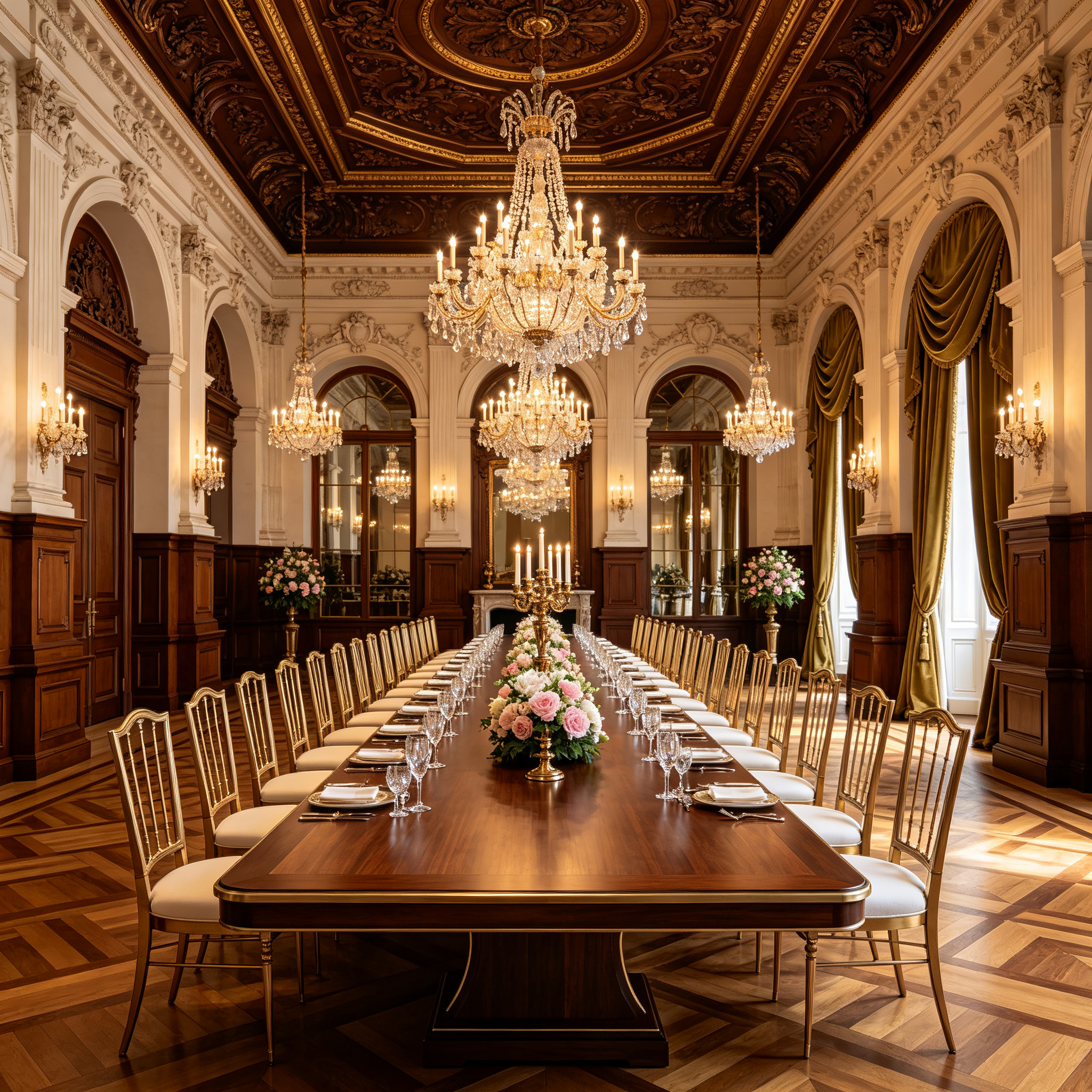
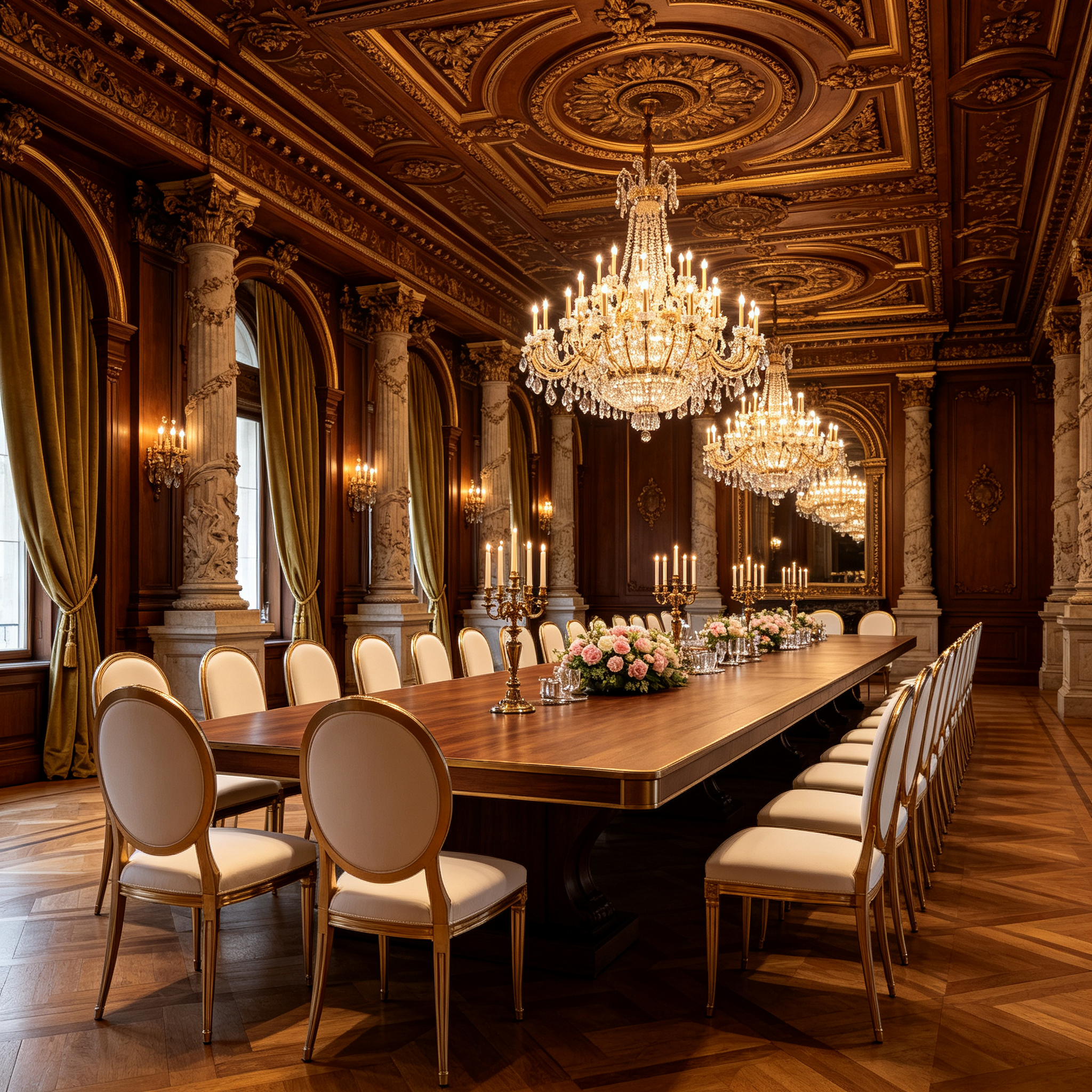
Long banquet tables have returned to wedding receptions because they create something traditional round-table layouts cannot replicate: the feeling of sharing one grand dinner.
In an ornate ballroom or historic wedding venue, a long wooden table can also become an architectural feature. Its strong linear form draws attention through the room, while rows of elegant upholstered wedding chairs reinforce symmetry and formality.
For smaller celebrations in particular, long tables can create a more connected, dinner-party atmosphere where the meal becomes an important part of the evening.
This makes long wedding tables especially effective for intimate weddings, rehearsal dinners and formal receptions where conversation and shared dining are priorities.
Round or Long Tables? Why Many Receptions Need Both
Choosing between round and rectangular wedding tables does not have to be an either-or decision.
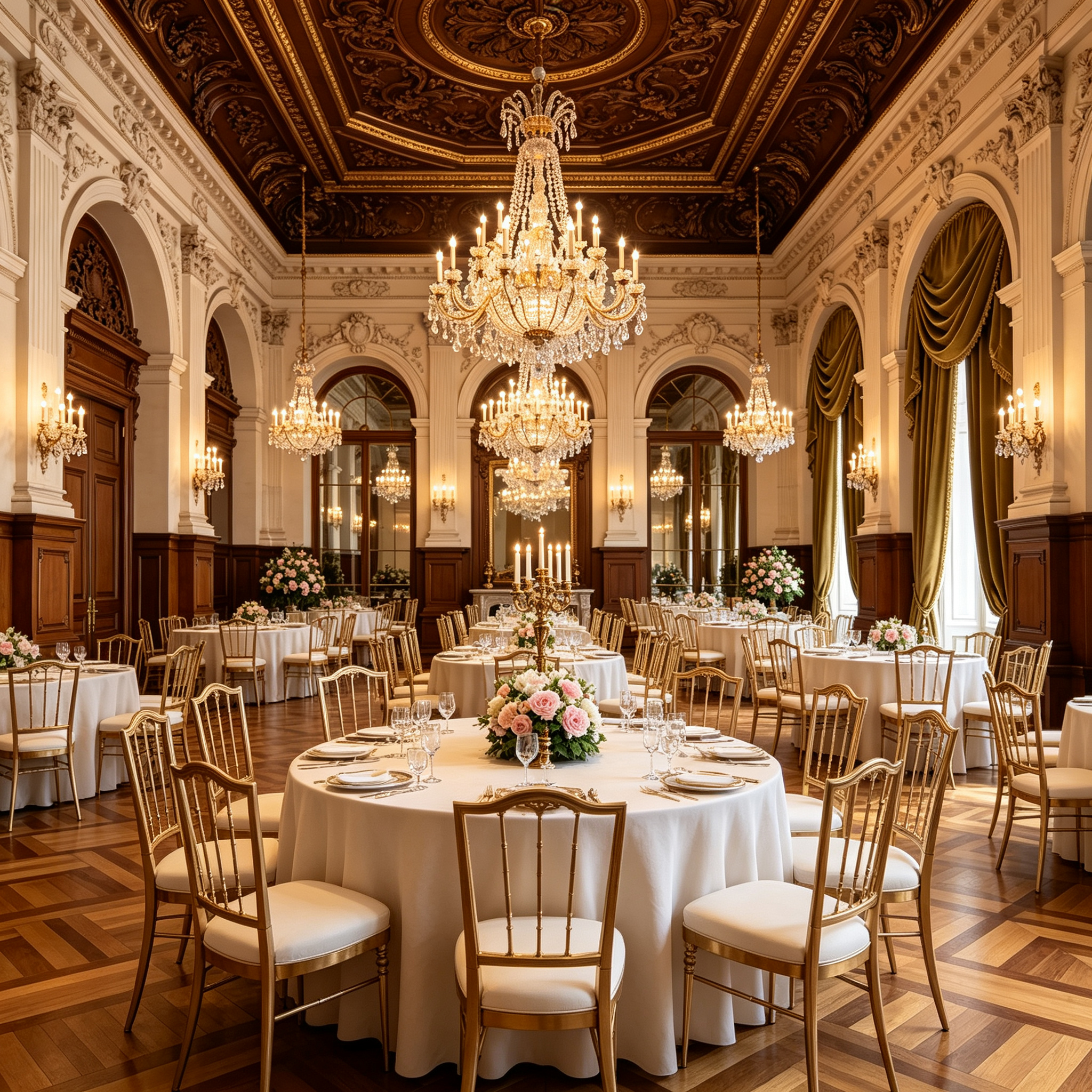
Round tables remain valuable because guests can see and interact with more people around the table, while long tables create stronger visual lines and a more communal atmosphere. Current reception planning discussions increasingly treat table shape as part of the overall guest experience rather than simply a decorating decision.
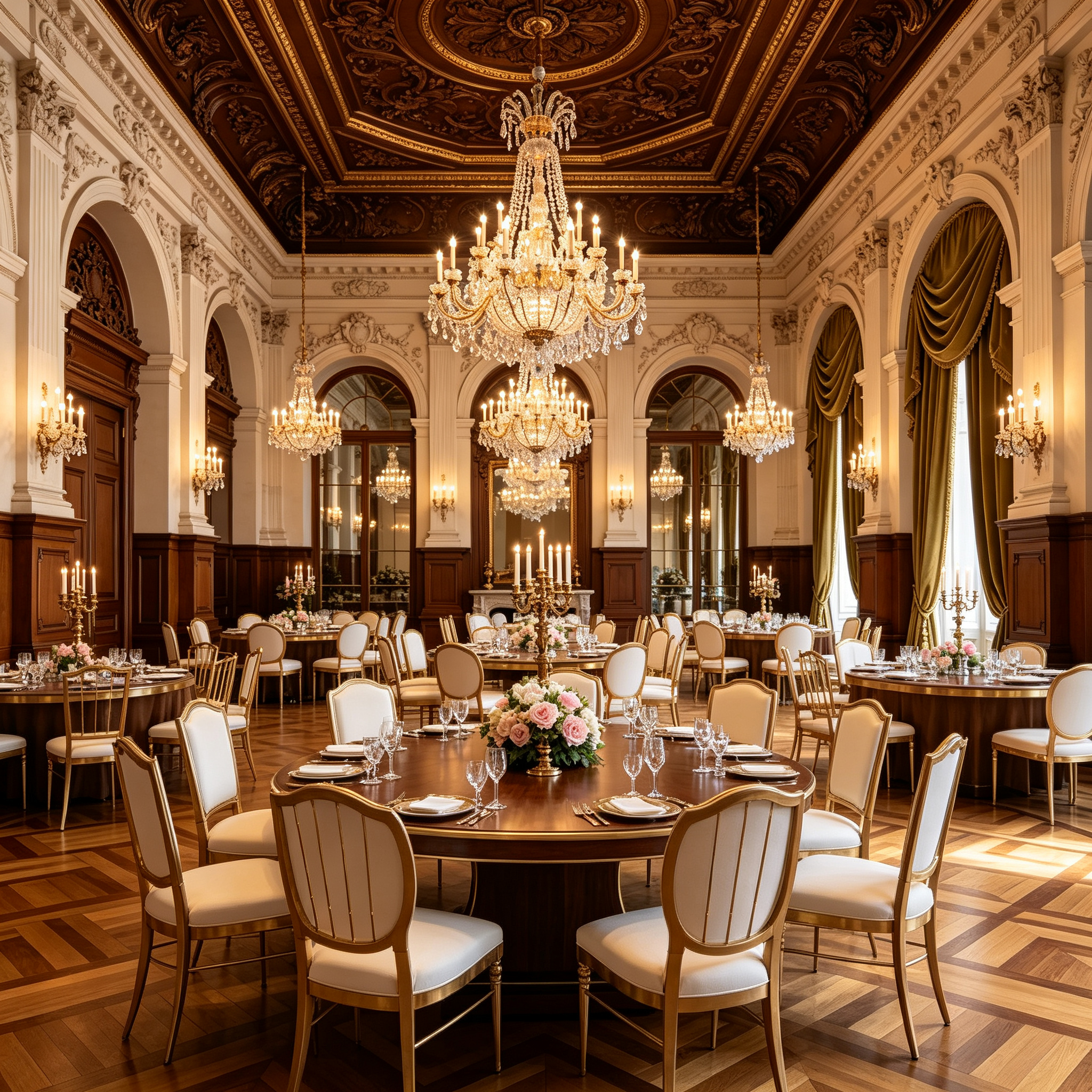
A mixed layout can therefore work particularly well in a large ballroom. A statement banquet table can anchor the room, while round tables accommodate additional guests and soften the overall floor plan.
The important consideration is not which shape is more fashionable, but how the tables work with the venue, guest count, service circulation and desired atmosphere.
Historic Venues Make the Table Part of the Architecture
The reception shown here demonstrates why traditional architecture and restrained furniture can work so effectively together.
Rich wood ceilings, classical wall detailing, crystal chandeliers and parquet flooring already give the room a strong visual identity. Instead of competing with that architecture, warm timber banquet tables and ivory upholstered wedding chairs complement it.
This approach also reduces the need for excessive decoration. Low floral arrangements allow guests to see across the table, while crystal chandeliers provide much of the visual drama overhead.
For a historic venue, the best wedding furniture often does not try to transform the room completely. It allows the character of the venue to become part of the wedding design.
Designing the Reception Around the Guest Experience
A beautiful reception layout still needs to work once guests arrive.
Table dimensions, chair spacing, aisles, catering routes and sightlines toward speeches or entertainment should all be considered before finalizing the floor plan. Long tables may create intimacy and strong visual impact, while round tables offer different conversation dynamics and greater flexibility in many formal venues.
The most successful wedding reception layout therefore balances aesthetics with hospitality. When tables, chairs, lighting and architecture are planned together, the room can feel impressive in photographs while remaining comfortable throughout dinner.
Ultimately, the appeal of the dinner party wedding is not simply a new table arrangement. It represents a return to something much more traditional: bringing people together around a beautiful table and making the shared meal one of the most memorable parts of the wedding.


